Each week we’ll be publishing some of the interesting things that members have been up to over the past seven days.
This week Ben and Bolster were up on the hill for the launch of OpenDataNI, with whom we’ll be working on a Hackathon in Early 2016. In other news, Dan has been working pretty much around the clock migrating, updating, and sane-ifying networking and ops for the space.
Coming up this week we’ve got Cryptoparty on Wednesday and the last ELi5 of 2015 on Thursday. Hopefully see you there!
These tweets are automatically selected from tweets from registered members who are listed in the @FarsetLabs/members twitter list using the #weeknotes hashtag
Events
What’s happening in the space in the next fortnight
Farset exists to support the community that uses it. If you use Farset Labs or attend events at the labs, then you are part of that community. If you would like to publicise something related to Farset, you can email info@farsetlabs.org.uk with the formatted content for us to use as a new blog post. Tell us what you’re up to, and we’ll show the world what madness happens at the Labs!
Each week we’ll be publishing some of the interesting things that members have been up to over the past seven days.
This is totally inspired by the same mechanic developed at DoEsLiverpool, and the code is open-sourced on my GitHub, and issues/bugreports/fixes are appreciated (I’ll eventually move it over to the Farset collection, once it’s battle-tested!).
It’s intentionally minimal and I’ll be looking at adding more advanced functionality later, particularly “Most popular FB / Tweets from Farset” and “Most popular Discourse Discussions”, but I’m not a designer so someone else can make it pretty.
These tweets are automatically selected from tweets from registered members who are listed in the @FarsetLabs/members twitter list using the #weeknotes hashtag
Farset exists to support the community that uses it. If you use Farset Labs or attend events at the labs, then you are part of that community. If you would like to publicise something related to Farset, you can email info@farsetlabs.org.uk with the formatted content for us to use as a new blog post. Tell us what you’re up to, and we’ll show the world what madness happens at the Labs!
It was a closely fought race between Pip and Ron but in the end, the community rallied behind Pip to help bring her vision to the leadership at Farset Labs.
When I hassled her for comment, this is what she had to say:
Cheers to all who got involved in the recent election. I’m delighted to have been voted in, and am looking forward to getting my hands dirty to help keep Farset an excellent place.
You can check out what Pip’s all about on her website.
PS The entire Farset Labs community would also like to congratulate Pip and her partner on their recently completed adoption, there are no two better people for it, and we wish you and your new family all the best!
Good merry-tide, members, friends, associates, and lovely patient observers!
The year rushed us into winter with the alacrity of a brusque elderly relation, so it’s once more time to meet together and eat together!
The Plan
Bring something tasty, or at least something edible, to Farset Labs for an evening of sharing food with good company, and identifying your opposite number. If you don’t have an opposite number, you can have a go at recruiting one.
No matter your persuasion or affiliation, it’s an evening of welcome open to all who frequent Farset and have supported us throughout our 2015 adventure.
There will be some accompaniments of the musical variety, and suitably bright decorations… um… decorating the place.
The Date
The date for this is Thursday 10th December (at 7pm).
The Cost
No cost other than your company and some form of shareable foodstuff (cold/hot, liquid/solid). We had a particularly large selection of pulled pork, desserts and cheeses at last year’s very popular meet-up, if that gives you any ideas 🙂
We do ask that non-members of Farset contribute a small donation to the venue charity for the evening. (Suggested donation: £3)
UPDATE: Voting is now open; if you haven’t recieved an email and think you should have, or can’t access the poll, contact membership@farsetlabs.org.uk to double check your membership status.
Our nomination period is up and voting will open shortly (emails will be sent to all current members eligible to vote) and in the meantime, you can peruse your options below, consisting of the nominee name and pitch:
1. Pip Shea
Farset Labs is extra_ordinary. It breaks the mould and defies the ‘wisdom’ of incumbent structures through community building and collaboration. It offers an alternative for those of us who lurk in various guises on the creative technology spectrum: a place where we can practice, with autonomy, among an inspired and diverse community. I would like to become a director to help sustain this special space, and to contribute to its emergent practices and identity.
I have been a member since early 2014, and for the last couple of years I have been researching hacker/maker culture. I have a good understanding of the practices of Farset and how it is situated in a broader global context.
Specifically, I would like to offer my energy to the following areas:
technology education and kids
measuring social impact
funding for social technology projects
participatory governance and ethics
membership drives
sharing Farset’s stories (its projects and practices) with the wider world
getting a laser cutter!!!
I want to become more involved in Farset Labs as I am passionate about grassroots making. During the 2000s – in Australia – I worked in community development as an artist, producer, and manager on projects that focused on net art, aerosol art, and large-scale outdoor projections. In 2010, I turned my hand to research to investigate ethical internet practices in the community arts field. I then worked as a research assistant at various universities in various incarnations. My research broadly explores digital cultures and philosophies of technology. I’m currently writing two book chapters about maker culture, and assembling a hacking/making/crafting bibliography on Zotero.
Other projects on the boil include: designing interactive tools with the QUB School of Psychology; editing an open access journal; and, making an art project that explores block chains and distributed databases through geometry. Ongoing interests include: appropriate technology, critical making, and food phreaking.
If you feel you need a little more info about me, it can be found at pipshea.net
Cheers!
2. RON
ReOpen Nominations
Ron does nothing, and means we open up nominations again.
The Directors assert that this election, odd as it is, satisfy the Director Appointment Rules as set up in the Operations Manual and ratified by Town Hall Consent from March 2014.
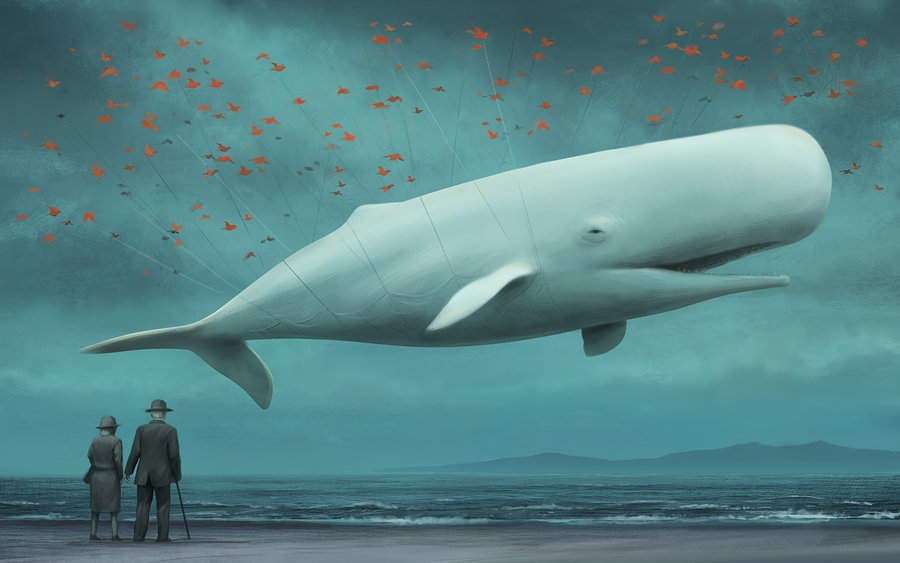
Artistic interpretation of the classic FailWhale, celebrating the inevitability of failure in the fast-moving tech world. Source: ka-92
Fail fast, fail cheap.
Or is it “fail fast, fail often”?
On Saturday, 7 Nov we’re uniting with some of our friends, including The Design Salon and The Potting Shed, for an all-day event, as part of the first ever Belfast Design Week. You’re invited to join us in a creative, hands-on, welcoming environment, as we all take the journey from idea to soup.
Yes, soup. We will begin the day at The Hive, venture over to Farset in the afternoon, then end up back at The Hive for a pitching session, while we enjoy some hot refreshment with Belfast Soup. Mmm, soup.
Then we’ll all go to the pub. Mmm, beer.
That Saturday of Design Week is designated as Makers’ Day so roll up your sleeves and come f*@k things up with us. You don’t need to consider yourself a designer or maker to get value out of the day. It’s a good chance to make some smart, creative friends and take part in the fascinating process of developing ideas.
Here’s the planned Itinerary:
10:00 – 12:00: The Potting Shed @The Hive : Bring your new or existing idea to the Potting Shed team and get their multidisciplinary input on how to make it happen or bring it to its full potential.
12.30: Walk from The Hive to Farset Labs.
13:00 – 16:00: FailFast @ Farset Labs: taking the ideas and designing prototypes to see how they might function in reality.
16:00: Walk back from Farset Labs to The Hive.
17:00 – 19:00: Belfast Soup @ The Hive: Buy some soup and pitch your ideas for the chance to win some startup money to make it happen!
19:00 – Collapse: Drinks at The Sunflower.
And here is the official page and links to register for other parts of the day.
For our part, we’re going to focus on that challenging step in the creative process where you have to get your idea out of your head and into the world so it can be given a chance to fail. During the workshop we’ll talk about what prototyping involves, and look at the recent revolution in rapid prototyping, assisted by technologies like 3D printers and the internet. Then we’ll stop talking and play – making simple prototypes with paper and pen and whatever we have to hand.
You can come to all or just part of the day’s events. Or just meet us in the pub in the evening. Mmm beer. There’s no charge but please register if you’re coming so we know the numbers. And we’re seeking techie, creative and communicative people to be in the room to help facilitate progress – please contact me if you can help.
We’re calling it FailFast to resurrect an old project that never got much momentum. I guess you could say it failed, rather fast. But that’s the whole point. There’s a popular sentiment in the entrepreneurial world that failure is a big part of innovation and creativity. So much so that it has become trendy. Most ideas don’t grow into anything substantial. Most startups collapse. The important thing is to try – develop your idea, get your prototype out into the world, see if it works and iterate on its development, and do so as quickly and cheaply as possible. It will probably fail so if you want something to succeed, fail fast, fail cheap and fail often. So yeh, we’re calling it FailFast.
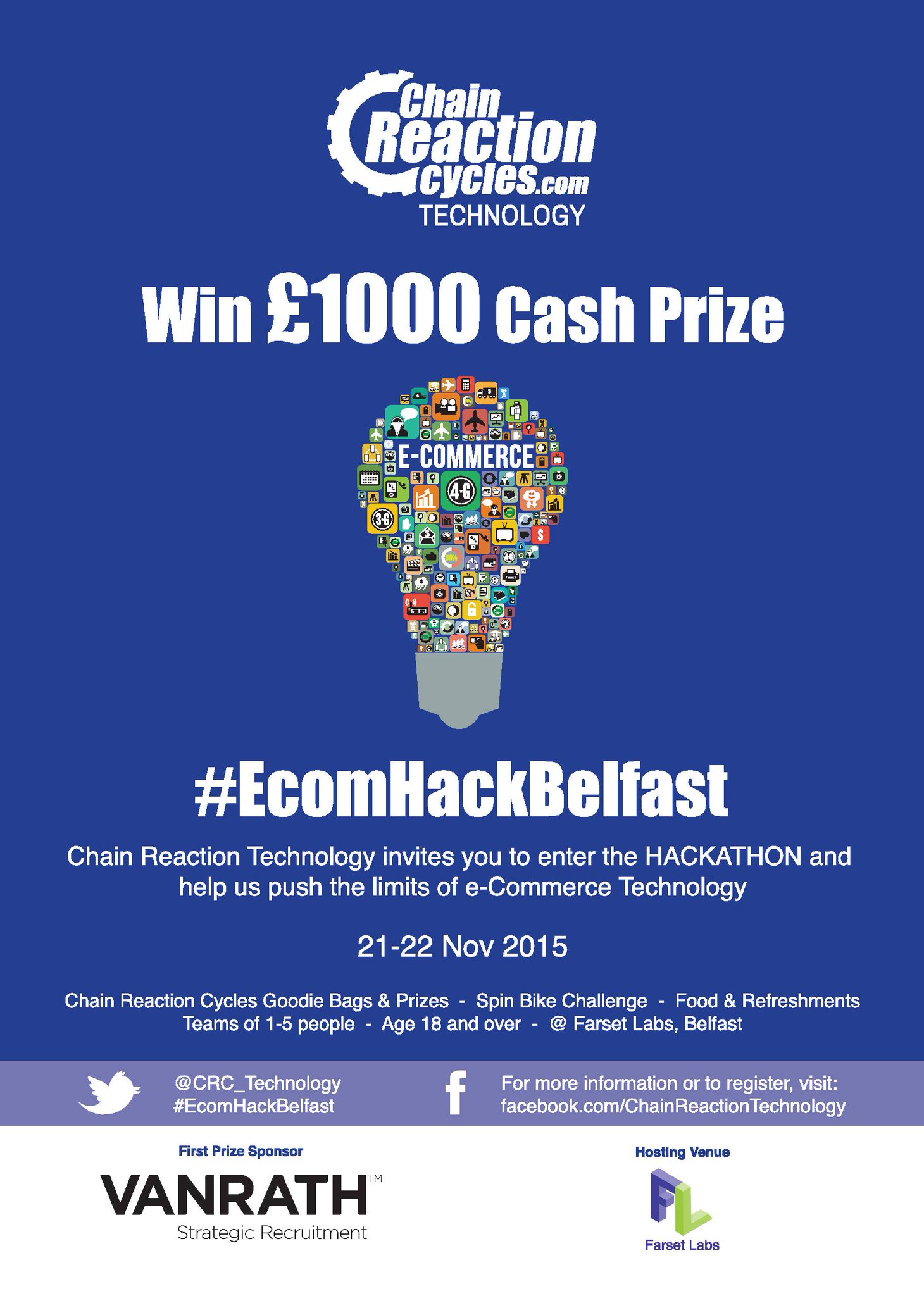
On the weekend of Saturday the 21st of November, Farset Labs is hosting a weekend long hackathon brought to you by the very nice folk at Chain Reaction Technology. Running from the morning of Saturday to the evening of Sunday the 22nd, the type of projects you can enter are completely open, with a general theme around CRT’s focus on eCommerce.
Chain Reaction will be running a £1000 prize competition for the best overall project, plus spot-prizes for spin-bikes and other cycle-themed activities over the weekend, with free meals for participants throughout the weekend. Your intellectual property remains your own, and every participant will receive a Chain Reaction goodie bag! Sign-up today to secure your place!
Chain Reaction Technology EcomHackBelfast
Schedule
The final event schedule will be announced in the week before the event, but needless to say, we will continue our efforts to make the time productive whiel encourage people to sleep and enjoy a relaxed weekend of making stuff.
Non-participants are always welcome to come have a look around during the day too 🙂 Entry is free for all, but only registered participants will be able to take part!
Farset Labs is run by a dedicated team of volunteers, starting with the original three directors back in late 2011/early 2012. Since then, we aim to try and keep the number of directors at five, which we haven’t been at for a while, so it’s time to (re)launch our 2015 Director Elections.
Nominations will open from the timestamp of this post until midnight on Sunday 31st October.
Nominees must:
Nominate themselves.
Have been a member for at least three months (not necessarily in one block).
Their ‘pitch’ which is 1000 characters maximum. (Suitability for role, experience, intentions etc.)
Be aware that, if successful in the elections, they must not have any convictions that would prevent them from being the Director of a limited company (i.e. convictions under the Fraud Act 2006) or any convictions regarding sexual offences against minors (i.e. convictions under the Sexual Offences Act 2003).
Be aware that they have legal obligations as a Director of Farset Labs, including their legal liabilities to HMRC etc.
Be aware that, if successful, they will be required to provide details including their legal name, sex, date of birth, addresses lived in the last three years, signature and National Insurance Number for the purposes of registration with Companies House.
For more practical information about what the Directors do and are responsible for, check out the Operations Manual.
Voting will open when the nominee profiles (consisting of the nominee’s name and pitch) are posted publicly on Monday 2nd November and will close at midnight on Friday 13th November.
Candidates are also asked to attend and be available to answer questions from the membership publically at our November Town Hall, also on the 2nd
Information on how to vote and the procedures surrounding voting, including the case of a draw, will be posted along with the nominee profiles. The results, barring any special circumstances, will be announced as soon as possible after voting closes, likely the following day.
Any questions can be directed to admin@farsetlabs.org.uk. You may also find it useful to review the records of previouselections, available on this blog.
CoderDojo is a movement orientated around running not-for-profit coding clubs and regular sessions for young people.
At CoderDojo, young people learn how to code, develop websites, apps, programs, games and more. In addition to learning to code, members meet like minded people, show off what they’ve been working on and as well as developing key critical thinking and problem solving skills. It’s also a lot of fun!
Thanks to our recent “mentor drive”, we’ve got lots of new volunteers to help out with running this great programme. (There’s always room for more!)
As part of this new wave of mentors, we’re hosting an induction session this Wednesday between 17:30 and 19:30, sneaking in before the Google Developer Group Meetup (although we can break out into the workshop if discussion continues).
Don’t worry if you’re running late / can’t make it, but it’d be helpful if you could let outreach@farsetlabs.org.uk know if you’re no longer interested and we’ll take you off the mailing list.
This discussion will include:
Introductions / Networking (“Hi, I’m $NAME, ask me about $SKILLS, don’t ask me about $FEARS”)
Digitisation is transforming our world and it is the communities of curious, creative people – like those who gather in makerspaces – who are best-placed to thrive after the dust settles.
My friends at the youth-led Create conference generously invited me to speak to their audience of a couple of hundred 16-18 year-olds last week. The offer triggered an instant drain on my free time as I tried to find some coherence in my thoughts on the Maker Movement. I wanted to use this speaking slot as an Archimedes lever to dislodge the attendees from any traditional career plans and catapult them into the chaotic, creative world of exploring, tinkering and production that we love so much in communities like Farset Labs. But I would have settled for just sharing one big idea about the world that got them thinking in a new way.
Fortunately, there is a big idea around at the moment that provides a context for the emergence of our new maker culture. And by big, I mean really, very, exceptionally big. Like world-changing, epoch-defining big. Simply put, the idea is that we are in the midst of a global revolution that is taking us into a new socioeconomic era, and we have the opportunity to hack our way to a happy future.
Of course, we can’t know right now what this period will be called in future. Just as it might have sounded weird in 1850 to ask a friend, “how’s the Industrial Revolution going for you?” We can’t see it clearly from the inside. Leave it to historians to define past generations.
But we can get some perspective on our current situation. We can take the reference frame of human innovation over the course of our existence. Here’s a quick run through…
5-7M yrs ago – our ancestral apes began to move out of the trees and into the African plains.
2-3M yrs ago – we see the first signs of basic tools being made.
~70,000 yrs ago – humans start to show evidence of specialisation in their hunter-gatherer practices.
~18,000 yrs ago – specialisation develops into the cultivation of crops and domestication of animals, launching the Agricultural Revolution (aka Neolithic Revolution). This gives birth to great phenomena such as large settlements, division of labour, hierarchical societies and religions, trading economies, and armies.
Late 18th Century – powered by inventions like the spinning jenny and steam engine, the Industrial Revolution kicks off. People go to work in factories, from which emerge modern, hierarchical companies with new concepts like management. The human lifespan doubles and a new middle class emerges. We enter the Industrial Era and again the world changes forever.
1950s–now – computers and the internet underpin the Digital Revolution, as the world goes from atoms to bits. We are now in the Information Era, characterised by the democratisation of communication, connection and knowledge resources.
Welcome to the Third Industrial Revolution
To summarise the above timeline in another way, we can say that there have been three transitions between major economic epochs in human history1: 1) foraging to horticulture, 2) horticulture to agriculture, and 3) agriculture to industrialisation. And within the last stage, there have been three industrial revolutions: the one we call the Industrial Revolution (late 18th to early 20th Century), the Digital Revolution (1950s to now), and finally the, err, well, we’re not sure what to call it yet…
A quote from Neil Gershenfeld, Director, The Center for Bits and Atoms at MIT and founder of Fab Labs.
The latest revolution, if we just assume that’s what we can call it, is essentially a combination of its Industrial and Digital ancestors. We went from atoms to bits, now we’re swinging back, as the atoms themselves become the new bits. In other words, where the digital world brought the costs of publishing, communication and learning down to the level of discretionary income, the same thing is now happening with the tools of production.
Think of the costs (of all sorts: money, time, expertise, etc.) required to go from having an idea, to selling a product in a global market, just 15 years ago. Even if you could have designed the product yourself, you might have needed to pay a hefty fee for the software to do so. Making a first prototype would typically have cost tens or hundreds of thousands of pounds, which you would probably have needed to source from banks or other traditional investors. And all that, before you have even tried to take your product into the market.
Now, the cost of access to manufacturing tools is often around 1/10,000th2 what it was just 10-15 years ago. And to learn the craft of using those tools often takes weeks now, not years. The journey from idea to global product business in this new paradigm might look something like this:
Design prototype with free software, like Google’s SketchUp.
Build prototype in a makerspace, or send the design to a single-run manufacturing service, such as Shapeways or Ponoko (for pocket-money prices).
Go to a crowdfunding platform (eg. Kickstarter) for early production and development costs.
Use an online service like Alibaba to connect with a manufacturer in the Far East, firing-up their facilities and running-out the first few 1,000.
Bring the product back to home soil, collaborating with high quality local manufacturers, to customise and produce the next few 10s of 1,000s.
Maybe head back out to Asia now, for mass-production in the 100,000s and beyond.
Retire or go back to 1.
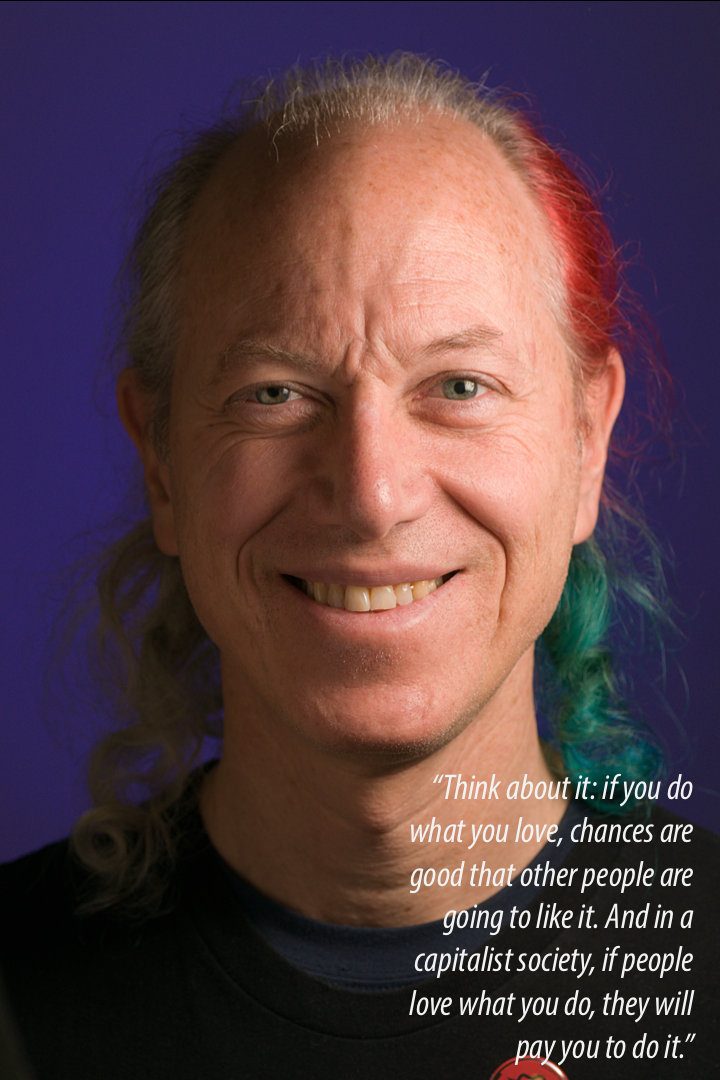
Mitch Altman, a hacker hero and no obvious capitalist, connects the joy of creative expression with the opportunities it can offer us.
If the Digital Revolution democratised connection, now affordable tools are democratising manufacturing too. The machinery available, of which the poster children have been 3D printers, laser cutters and CNC machines, allow us to operate from the nanoscale up to the size of buildings. Now almost anything that can be imagined can be built by ordinary people. This is a first for our species and planet, there is no precedent or rulebook to employ here.
The rising popularity of hacking and making may be a response to this new environment and is certainly an avenue to benefitting from the opportunities it presents. That is not to say we should all focus on saleable products, it is just as much about play, artistry and education. Communities are forming all over the world, united by the childlike joy that is felt when we are able to explore our curiosity and make things – to express ourselves in creative ways. We are grouping together, sharing ideas and seeking places in which we can interact and collaborate. Makerspaces and hackerspaces are nodes in this rapidly growing global network. Three years ago, before our members assembled and launched Farset Labs out of their own pockets, it felt like Northern Ireland was missing the revolution. It felt like Farset needed to exist.
At time of writing, Hackerspaces.org lists nearly 2,000 locations worldwide. And those are just the ones who self-identify with the “hacker” label and have been added to the list. We can assume there are many more venues and groups that exist under the broad definition of hackerspace, makerspace, hackspace and so on – and let’s not get into the name issue here.
Digital Darwinism
So the Maker Movement seems to be a response to, or a result of, the shift from one socioeconomic epoch to another. An obvious analogy to this concept is the response of species to changing environments. When an asteroid smashed into Earth 65M years ago, triggering a global extinction event that ended the reign of the dinosaurs, it was our small, furry ancestors who seized control of the food chain. They were better suited to survive in the new climate that suddenly engulfed them.
Evolutionary analogies are popular in this context. In what can be called Digital Darwinism, organisations are seeking strategies for becoming more adaptable as their world changes, and does so at an accelerating pace. A statistic that possibly highlights this process is the falling lifespan of companies. A popular study by Richard Foster, of Yale University and Innosight, showed that companies on the S&P 500 Index had an average lifespan of 61 years back in 1958, which came down to 25 years by 1980, and 18 years by the time of the study, in 2012. He and his associates put this down to what economists call creative destruction.
Which species will survive and thrive in a future where digital manufacturing – and who knows what next – is placed in the hands of the masses? “Survival of the fittest” is the catchphrase of Darwinian evolution, but it’s a bit of a curse on Darwin’s actual theory. The idea of “fitness” can be mistaken for something like strength, speed and agility, when it’s supposed to mean “better designed for an immediate, local environment”3.
Better suited to the post-revolutionary world is somebody who can not only change her behaviours to meet the challenges of the new environment and exploit its opportunities, but can also make change itself one of her capabilities. We don’t know when the next revolution will occur or what it might involve. But take another look at the timeline above – it’s striking how the periods between each revolutionary event shrink exponentially as history plays out. Likewise, the time taken for each change to run its course is much shorter each time. If change itself is a shifting problem, we should make adaptation part of our fitness regime.
Innovative adaptability in a world of accelerating change requires a curious mind and a creative spirit. Those who make and share things become learners and teachers simply by their actions, and they do so more effectively when they are together, in communities like ours. Their passion for new and interesting things could be their greatest strength.
In other words, the geeks shall inherit the Earth.
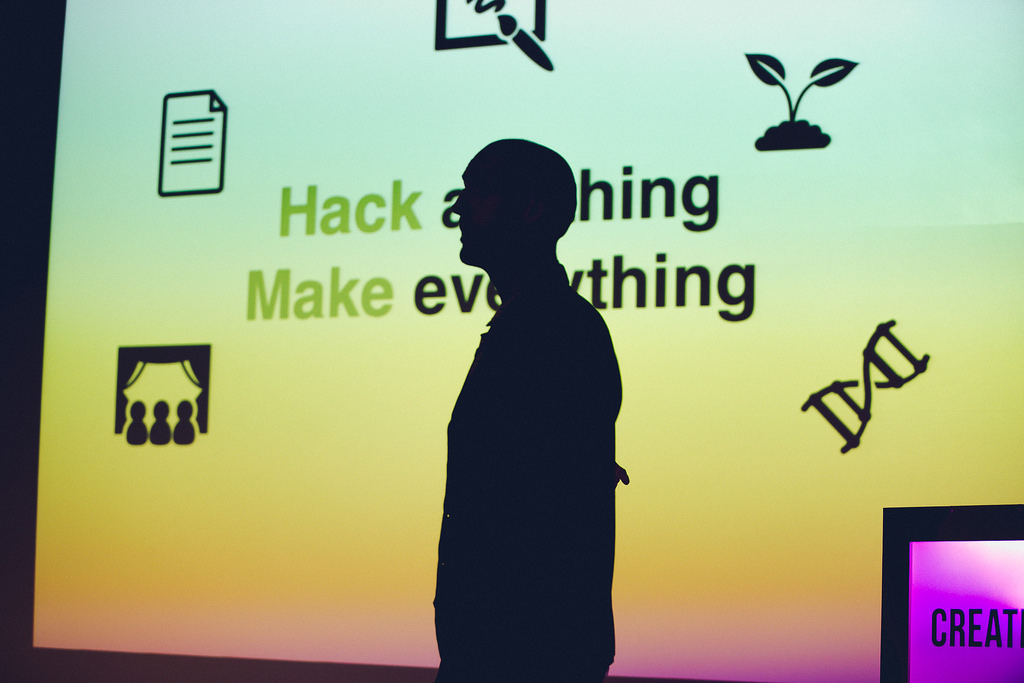
My closing slide at Create 2015. If we have the tools to hack anything in the world around us, we can make anything we want.